Behind the Product is the series where I walk through decisions in my own projects and what I changed because of them.
The problem that got me started
In about ten years as a teacher, I kept seeing the same need among students: they often know they have to move forward, but they are not clear on what the next step should be. That problem is what led me to start building Rumo+, an education product.
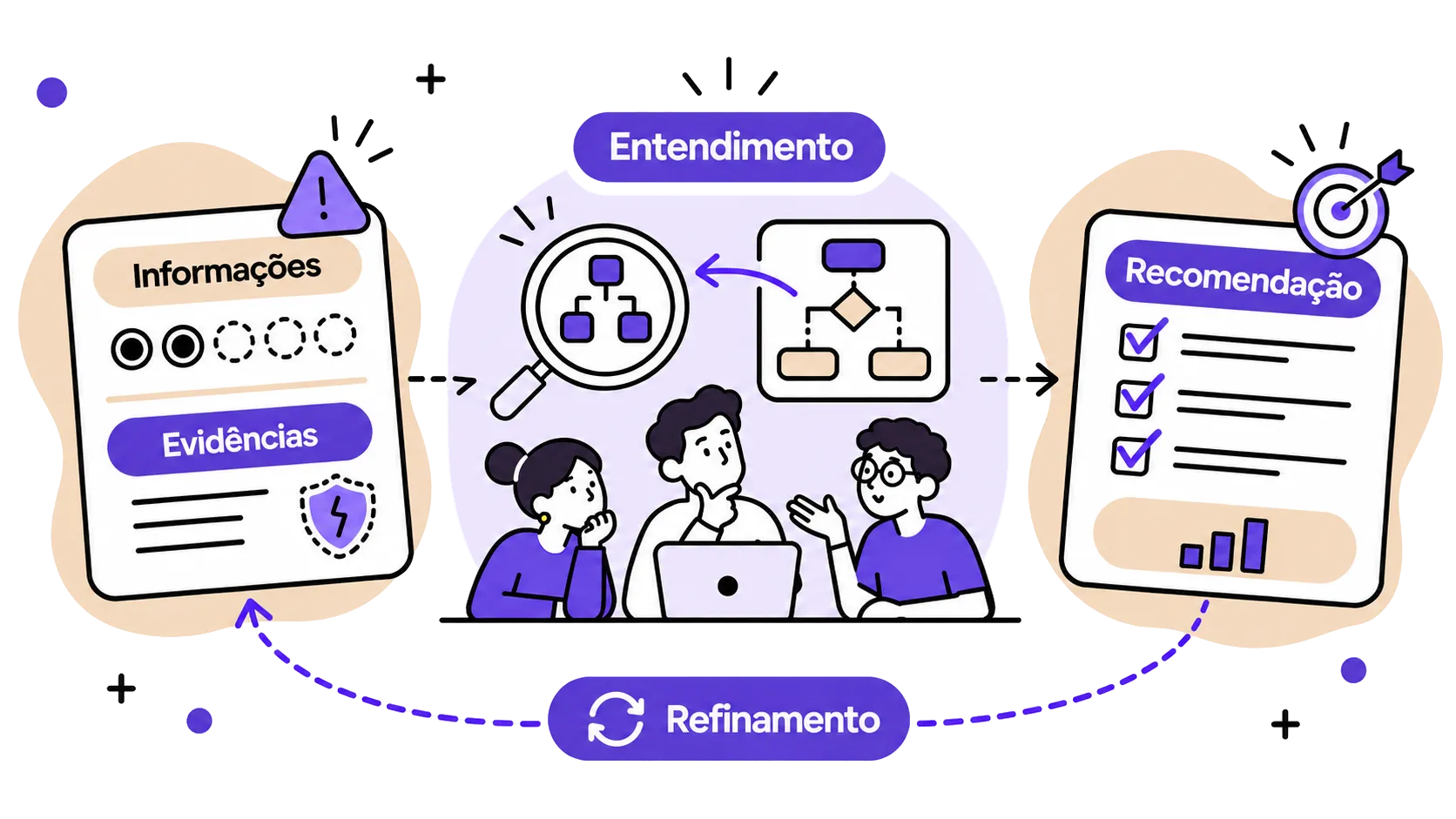
The idea seemed simple at first: help students understand their situation better and, from there, guide them on what to do next. As I started turning that need into a product, I realized that to point to a next step, the product first has to understand the starting point.
The logic that made sense on paper
I built a first version of the logic that read the student’s answers and generated guidance from them. On paper, the reasoning made sense. The problems showed up when I started testing scenarios.
In one of them, the student had similar results in two skills, and the first version flagged one of them as the priority with the same confidence as a case where the difference was clear. With only a few questions per skill, a small difference can be chance. The guidance was well written, and the product had no basis for saying it.
A well-written recommendation convinces even when the basis is weak. A student close to a test tends to follow what the screen says, and wrong guidance costs the review time they had.
The choice
At that point I had a choice: keep refining the final answer, or go back a few steps and question how the product was understanding the user.
I chose the second. Refining the answer would have improved the wording of the guidance and left the weak basis as it was. Going back led me to review part of the logic, reconsider which information should influence the decision, and test different possibilities again.
How this shows up in the product today
Rumo+ looks at five answers per skill before suggesting where to start. Five questions do not measure mastery, so the rule also defines when the product should not decide:
- One skill: shows a starting point and never talks about a “biggest difficulty”, since there is no comparison.
- Two skills, with a difference of 0 or 1 correct answer: the student chooses, with nothing preselected.
- A difference of 2 or more: provisionally suggests the skill with fewer correct answers.
- Weak questions or insufficient evidence: suggests no priority, even if the difference passes the limit, and explains why.
The student’s self-perception is kept apart and does not change the priority. The two-answer difference is a product rule of mine, with no psychometric validation, and that is why the screen treats the suggestion as provisional.
What still needs validating
The product is still in development and there is a lot left to validate. Testing with people is planned and has not happened yet. So far, I know the rules behave as I specified. I still need to find out whether students understand the guidance and can act on it.
What I take from this
Now, when a recommendation seems weak to me, I start by asking what the product knew to get there.